The seasons at a glance
| When |
What to expect |
Plan for |
| November to March |
Main season: long, warm days and vineyards in full leaf |
Heat and sun on open-air legs |
| December to February |
The busiest weeks on the Wine Tram and at the popular estates |
Booking ahead; water, sunscreen and a hat |
| January to April |
Grape harvest, mainly in February and March, depending on the grape |
Harvest season in the vineyards; tastings as usual |
| May to October |
Cooler, quieter months |
A warm layer; fewer crowds on the tram |
Summer: the main season
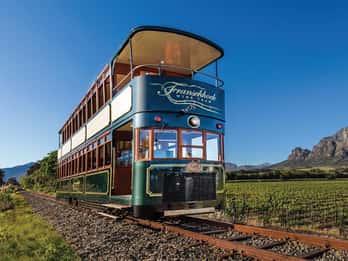
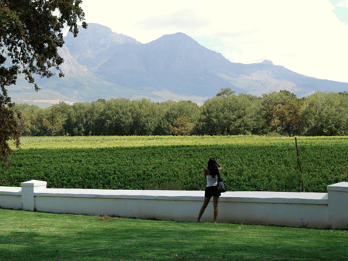
From about November to March the Winelands are at their busiest and warmest. The vineyards are green, the days are long, and the estates are in full swing. December to February brings the most visitors: the Franschhoek Wine Tram is at its fullest, and the popular estates get busy. If you are travelling in those months, book your tour ahead rather than on the day.
Summer days get hot. Much of a Wine Tram day is spent outdoors or on open-air trolleys and buses, and the bike tour in Stellenbosch is out in the sun too. Pack water, sunscreen and a hat, and drink water between tastings.
!
Peak summer: book ahead, plan fewer stops
From December to February the Wine Tram is at its busiest. Book early, choose a handful of estates rather than every stop, and leave time for waits. Our Franschhoek Wine Tram guide covers the planning in detail.
When is the grape harvest?
The harvest falls in late summer. According to Wesgro, the tourism agency of the Western Cape, the harvest season begins in early to mid-January, depending on the grape variety. An industry overview drawing on the wine body Vinpro describes the usual pattern: early varieties such as Sauvignon Blanc from late January or early February, the main harvest in February and March, and the later varieties into April. The exact timing shifts from year to year with the weather.
What that means for a wine tour: the tours on this site are tasting tours, and picking grapes is not part of any of them. Visiting in harvest season means seeing the vines heavy with grapes during the busiest weeks of the wine year. Wesgro also notes that harvest festivals are held from the start of the harvest until March — check local listings for your dates.
Autumn, winter and spring: the quieter months
Outside the summer peak the Wine Tram and the estates are less crowded, and the days are cooler. Wine tours run in the cooler months too — reviews from May, June and July describe tours in full swing, and one reviewer on the 3 Regions tour found the wineries great even in winter. Bring a warm layer for the mornings and evenings, and for open-air vehicles.
The trade-off is shorter days and cooler weather for the views. If you mainly want the tastings and the company of a guide, the quieter months are a relaxed time to go.
Planning tips for any season
- Book ahead in December to February — the tours listed here offer free cancellation up to 24 hours before the start, so you can hold a date.
- Pace the tastings — drink water between estates, especially in the heat.
- Leave the car keys — tasting at several estates and then driving is a poor combination; the tours and the Wine Tram transfer handle the road.
- Check what the booking includes — tastings and lunch differ from tour to tour. Our Wine Tram vs guided tour comparison lists them.